


I (Mark) know firsthand that after you’ve engaged in an affair, it’s tempting to not share all of your actions with your spouse. However, this will not spare them the pain.
It will INCREASE their pain because it’s very likely those indiscretions will be discovered. The pain of discovery is far more wounding than the pain of disclosure.
At first, I held things back, and honestly, there were some things I didn’t disclose because I didn’t do the work to remember them. But then they were discovered, and this caused my wife, Jill, so much pain. Not only that, it broke her trust again. That’s what dishonesty does.
I do a deep dive into healing your marriage after an affair in my book I Really Messed Up: Your Next Steps to Heal Your Marriage After An Affair. Today I want to give an overview of some important principles for the healing journey.
When we hold back sharing the whole story, it breaks trust again when it’s discovered. Eventually, I disclosed everything to Jill so we could truly begin healing. It was scary, but so important.
One of my core frustrations before my affair was that I kept saying to myself, “Jill doesn’t even know who I am.” Sadly, she didn’t know me because of me. I didn’t tell her. Now I had a mess to clean up and getting to know me was part of that process. This included knowing what I did.
In this blog, I want to share with you some important lessons I learned from the disclosure process.
If you’re new to our community and you’ve never heard our journey of how Jill and I moved from a 1.0 marriage to a 2.0 marriage after my infidelity crisis, you can watch us tell our full story here:
Before we dive in, I want to emphasize that, before you begin the long journey of healing with your spouse, it’s crucial to do a U-Turn and recommit fully to your marriage. That means breaking off all contact with your affair partner completely, and making sure that neither you nor they feel that any doors remain open for possible reconnection. The sooner you take this step, the sooner you can start making real progress with your spouse. I wrote a helpful letter that you can use as a template, which you can find here:
How to Break Off An Affair (Sample Letter)
Once you’ve completed this step, you can move forward to rebuilding trust with your spouse—and that starts with disclosure.
What NOT to Do
What keeps us from disclosing is fear. We might say we fear hurting our spouse more and I have no doubt that’s true. However, what we’re most of afraid of is the conflict and anger our honesty might bring. Because of this, you’ll be tempted to do three kinds of ineffective disclosure:
- The “fly over” disclosure: This is where you give the big picture, hoping it’s enough. However, it isn’t enough and in the long run it will create more questions.
- The” hit and run” disclosure: This is where you swoop in at an inopportune time for interaction, but safe enough for you to disclose something. Then you give enough to just say you did, then quickly take off busying yourself with something else. This isn’t effective because your spouse feels like you hit them and ran, which you did.
- The dribble disclosure: This is where you dribble out facts, here and there. You share enough to feel satisfied that you’re doing what you’re supposed to, but not enough to be helpful for healing your relationship and providing the full picture your spouse needs.
All of these ineffective disclosures cause additional broken trust. You’ve already broken trust in a big way so don’t keep breaking trust when you need to heal. Instead give a full disclosure. This is where you reveal everything you’ve done. Often it’s helpful to write out what you did. Then sit down with your spouse; and share openly, in surrender and humility the details of ALL of your actions.
Sometimes disclosure is best done with a counselor or a trained coach. This is particularly valuable if your indiscretions have been with multiple partners or you’ve acted out in a variety of ways such as infidelity, porn, talking with other people online, misusing money, etc.
A Helpful Template to Follow
Have you ever heard the saying, “If something is worth doing, it’s worth doing right the first time?”
I can’t think of a situation that this advice fits better than disclosure after an affair. Revealing the truth about a betrayal is painful for both parties—so it’s best to do it thoughtfully and authentically from the start so that the healing process can begin.
Here’s a template I recommend following for a healthy full disclosure:
- Take time to think through a timeline of everything you’ve done from beginning to end. This may take you several weeks to pull together.
- Schedule time for you to communicate your timeline.
- Communicate the timeline to your spouse. Allow for questions.
- Communicate your thoughts and emotions, as best you can.
- Allow for more questions. Stay steady with humble heart. You are rebuilding trust right now in how you handle this. Don’t allow yourself to blame, be defensive, or accuse your spouse. You did this. With God’s help you can walk through this with the right attitude.
- Allow for emotional responses. You must give your spouse room to express themself, to show emotion. This is part of the journey of rebuilding a new foundation.
The more I examined my own heart, the more I understood that I had lived in dishonesty for much of my life. I learned to be dishonest to keep from inciting my stepfather’s anger and abuse. The pleaser in me fueled my dishonesty because I just wanted to keep everyone happy. Eventually the dishonesty over the years caused a simmering anger in my heart that fueled my decision to create my own separate life.
Learning to be honest was a huge relief for me but it was a skill I had to develop. As I moved to a new life of being honest, I was committed to honesty with love and with respect. Sometimes when Jill would ask a question, I would ask her back, “Do you need this to heal?” If she said yes, I would tell her the truth. Even situations like when Jill would ask me if I liked a dress she tried on at the store, and I didn’t, I would honestly tell her that I didn’t like it and why. I would not be rude, but loving and respectful. This helped me break that unhealthy pleaser mindset.
Answering Questions
When trust has been broken, there are questions. Lots and lots of questions. How you respond to those questions will make all the difference in the world. This is where we can easily become defensive and if you’re serious about helping your spouse recover from your affair, there is zero…nada…absolutely no option to be defensive. How you answer questions will either rebuild trust or break it once again.
I accepted that Jill didn’t cause my affair. I chose an affair. I could have chosen other ways to respond to the frustrations in my marriage, but I didn’t. I also told so many lies that I couldn’t honestly remember or keep track of it all. I fully disclosed all that I could, and in humility agreed to answer every question no matter how many times she asked it. Humility began to rebuild trust.
Answering the questions with love requires humility and self-control. The early months of healing have the most questions. Don’t be surprised by that. Your spouse is trying to catch up to understand what reality really looked like. They were in the dark to what you were doing. Now they have to come to grips with what was really happening. Give them the grace of catching up logically and emotionally.
Unraveling an affair is like unraveling a ball of yarn. As new layers are experienced or as different perspectives or points of remembering are realized, there will be questions. We experienced this many times. For instance, as Jill would drive by a hotel I visited with my affair partner, she would have different realizations about it which revealed different hurts. Here are some examples of actual conversations we had:
Conversation 1: Mark as we passed that hotel, I realized you were parked there in broad daylight, and this hotel was only 2 miles from our home. I’m amazed at how bold that was and what a risk that was for our kids to discover what you were doing. That really hurts.
Conversation 2: Mark, as we passed that hotel, I was thinking about the money that was spent out of our budget and the financial mess this all caused. Do you realize how much money you spent? Do you realize how much you stole from us financially?
Conversation 3: Mark as we passed that hotel, I thought of your sexual betrayal to me. That was very painful.
These are exact things Jill communicated. Here’s how I answered every time in some form: I’m so sorry for the pain that has caused you and sincerely ask for your forgiveness once again. I’m committed to us and will never hurt you in that way again.
When she asked about the money: I’m so very sorry for how I misused our finances. I know we have incurred debt because of my choices. I hate that my choices affect both of us and I’m committed to doing whatever it takes to clean up the mess I made. Will you please forgive me for misusing our finances?
Guiding Principles for Answering Questions
- No defensiveness. Stay in humility and own the hurt you caused.
- One person’s hurt at a time. When your spouse is communicating their hurt, keep the conversation about their hurt. Don’t insert your hurt into that conversation. (It’s ok to communicate your hurt in a different conversation.)
- Keep a calm, gentle, quiet spirit of humility.
- Reach out and touch your spouse if they are crying. Hold them if they will allow you to.
- NEVER say that you’re tired of answering questions. Or that you’ve already answered that question a million times. Stay steady and answer again, offering reassurance that you are all in.
It’s very likely your spouse is stronger than you have given them credit for. I found that in Jill. She was deeper and stronger than I imagined. I’m so glad I brought a better me to the table so I could see a deeper level of who she was.
If you’re navigating the disclosure process right now, I want to offer you some encouragement. You might feel lost and confused, unsure if your marriage will ever truly recover from the trust that has been broken.
I’m here to tell you, as someone who has walked the road of healing personally with my wife, Jill, that it is possible. Not only is it possible to recover after a betrayal, but if both partners are committed, you can build a marriage that’s even stronger than what you had before.
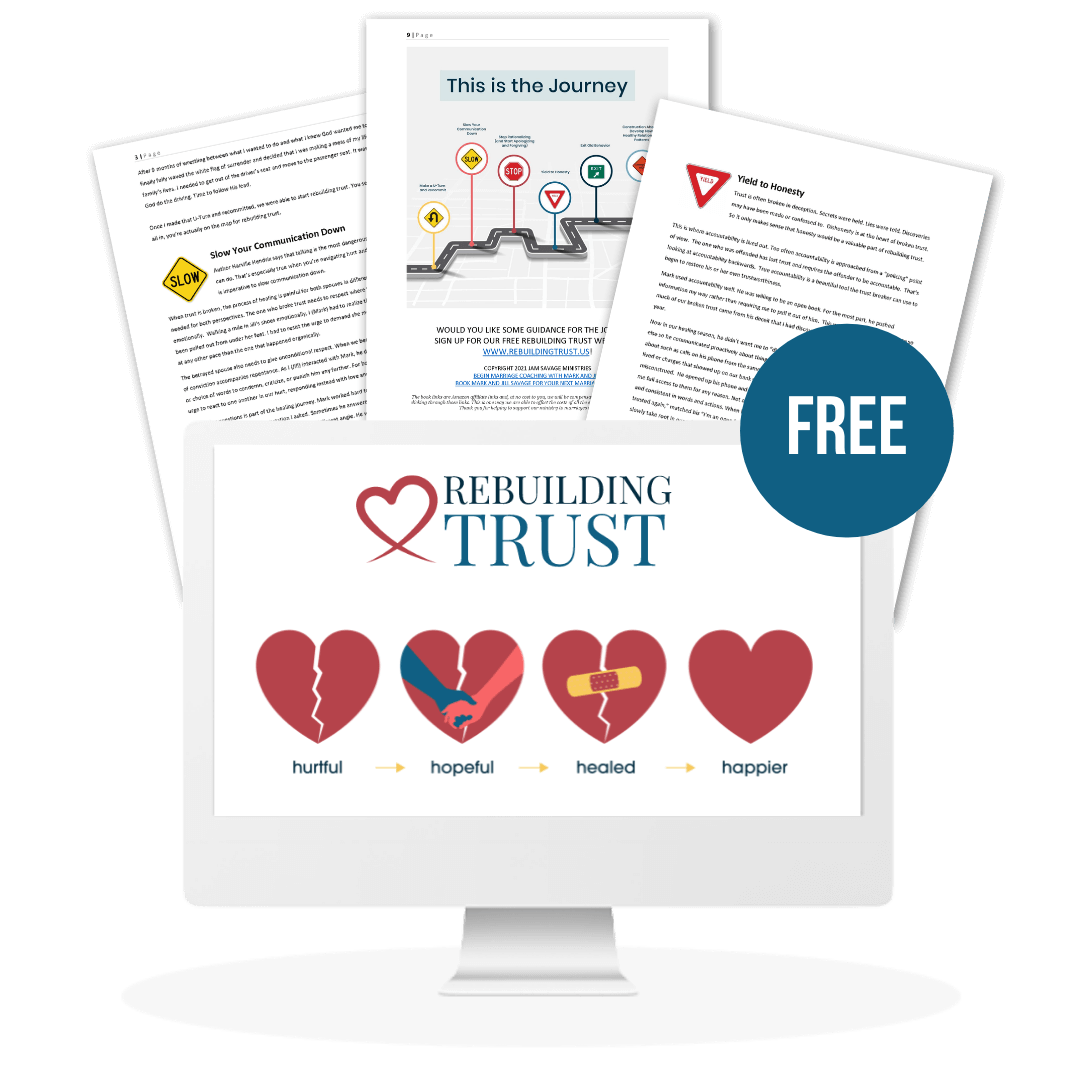
Right now, that might seem like a destination that’s far away, and you’re probably not sure which direction to go, or how to take the first step. That’s why we created our Rebuilding Trust Roadmap. This 100% free download will teach you the 6 practical steps to rebuilding trust after betrayal. If you’re ready to do what it takes to heal your marriage and you just need a guide to steer you in the right direction, this resource is for you.
Click here to gain instant access to the free roadmap >>










Mark (and Jill),
This is so wonderfully spelled out. Thank you for sharing your story and helping marriages in such a meaningful way. I know of many marriages where an affair lead to divorce, and I’m sure this would have been helpful.
We are a part of your date night membership, and I appreciate you and Jill’s ministry very much!
Thank you Ashley!